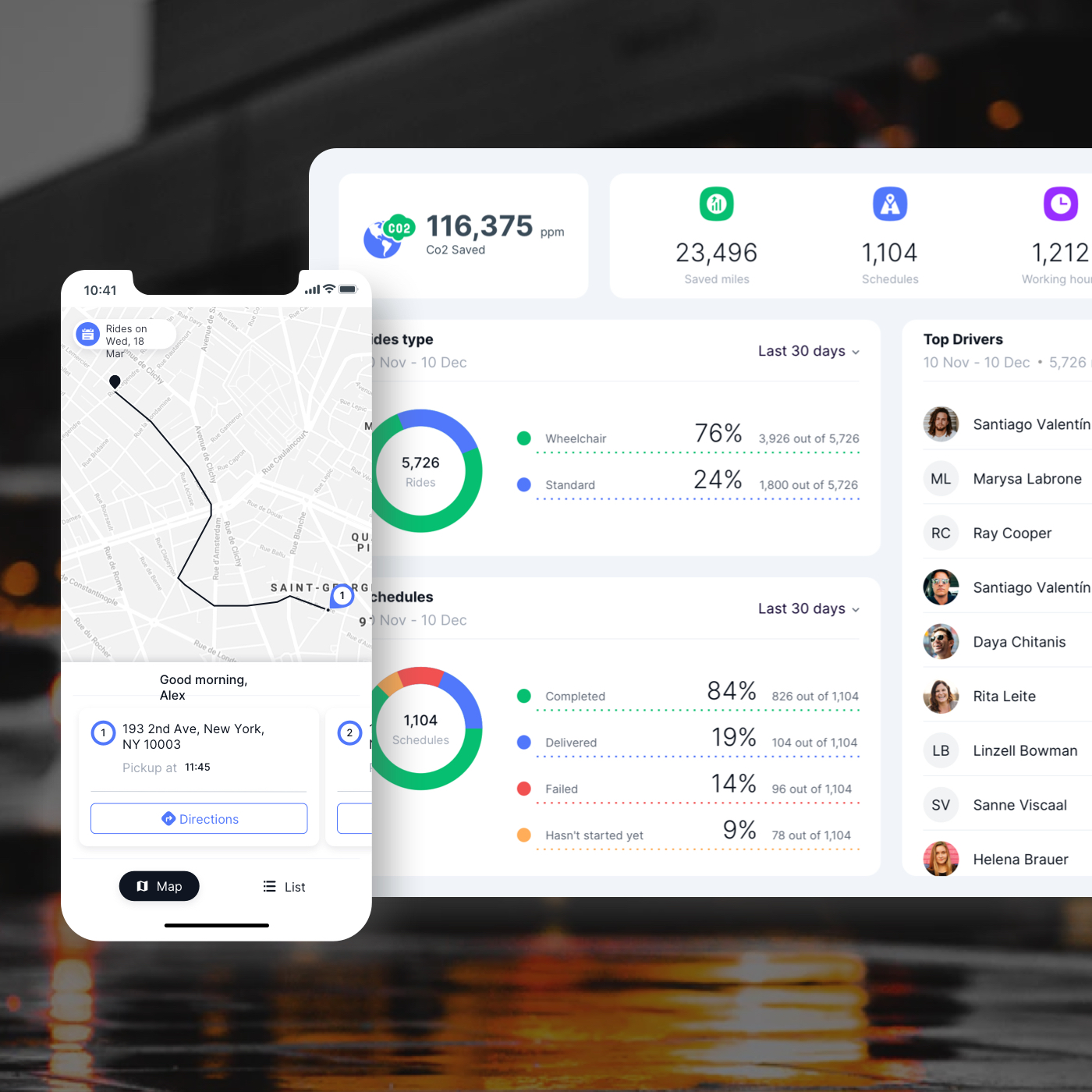
Objective
When I started working on this project, the Optimizer was just a feature in another product, Dispatch, which was used to manage fleets. Many of our customers really liked this feature, also new customers wanted to use it, but only in it.
For example, customers who already had a fleets management tool in use but without the option of optimizing future rides. That's why we decided to make the Optimizer a standalone product.
Pain Points
Uploading files and errors handling
The optimization tool algorithm worked great, and add a lot of value to the users who saved hours of manually planning, but the user experience wasn't good enough.
Uploading CSV files outside the product and receiving the results in email has made the optimization process more difficult. For example, if there was an error in the file, the user had to fix the source file and start the whole process from the beginning.
Long and busy form
The previous UI was very busy. The optimization process was very complex due to the fact that in order to optimize future rides it was necessary to fill a very long form which created a cognitive load on the user.
In conversations with our customers, they reported that they didn't use these settings on a daily basis, once they set them up, they barely changed them again.
Shifts and drivers management
Previously, the system didn't know how to pair a list of drivers with the results of the planned rides. In order to implement this option, another file with list of drivers was needed to upload before the optimization process, which made the process even more complicated.

 Yotpo, Email & SMS multi-message
 App UX/UI. Prototyping. Usability Testing